
You would not be reading this article if you did not have some concerns about the fit of your women’s suit. I’m here to help, even though some of my opinions may seem a bit … blunt. Just remember I want you to look your best every time you have to wear a suit. This guide focuses on how a suit should fit a woman in a professional setting.
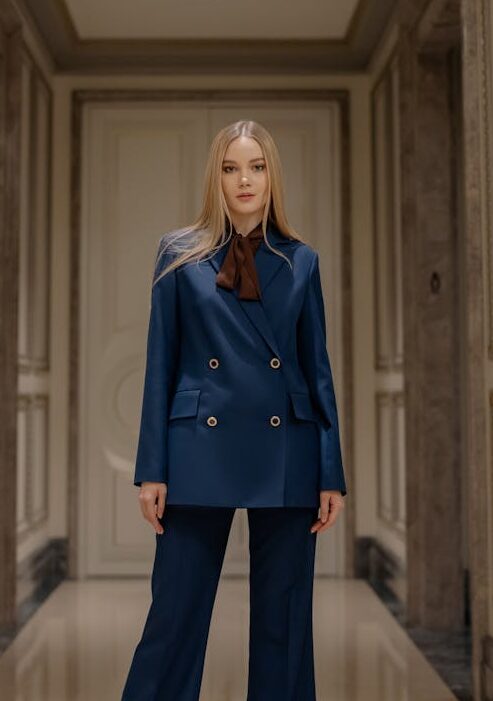
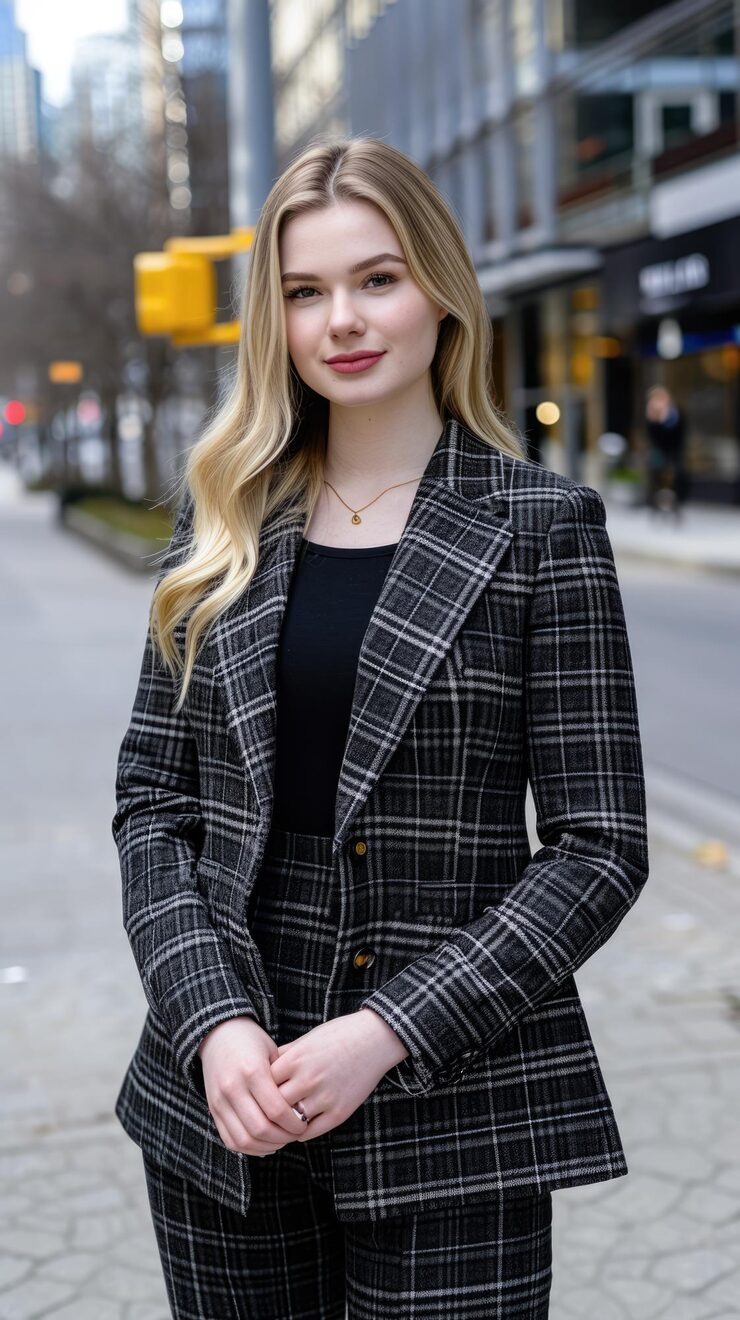
The length of a jacket will vary based on styles and preferences. For the most flattering fit, ensure that neither the bottom of the jacket nor the bottoms of the sleeves end at the widest points of the body (i.e., the widest points of the bust, stomach, or hips). It is not necessary to mimic men’s styles when wearing a suit. Button-front, collared shirts are not required for professional presentation. My personal preference is a shell or a thin sweater with no buttons to gape around my endowments. However, one detail from men’s attire is still valid for women in a professional setting. Long sleeves, ranging from bracelet length to full length, will always be more formal. A sleeveless sheath dress does not look as professional (or be as warm) as the suit the man beside you is wearing. To button or not to button: In another departure from the fit of men’s clothing, where men’s jackets are expected to be buttoned except for the bottom button, women’s jackets offer greater flexibility. Some women prefer to wear a suit jacket fully buttoned. In this case, there should be no pulling or gaping across the buttons or any of the seams. Other women, like me, prefer to wear the suit jacket fully unbuttoned. Here, it’s not necessary that the jacket can be buttoned, only that it looks like it could fully close. You should be able to cross your arms or drive a car comfortably with the jacket on.
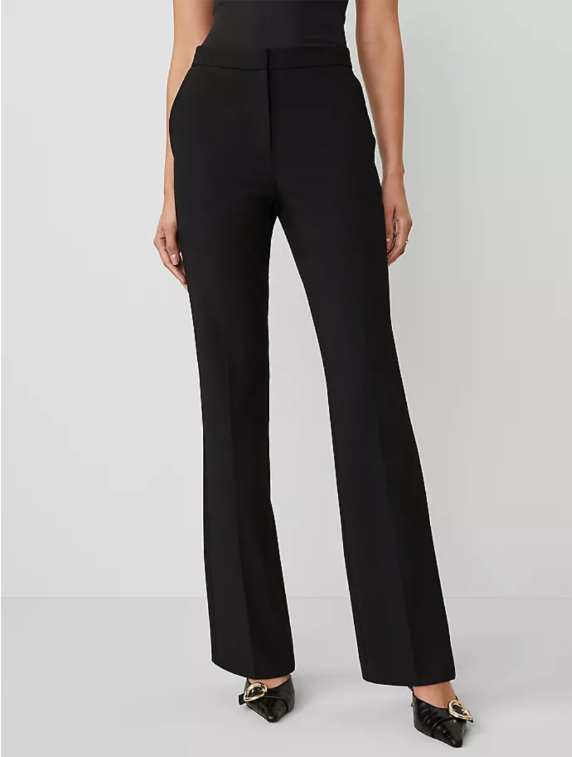
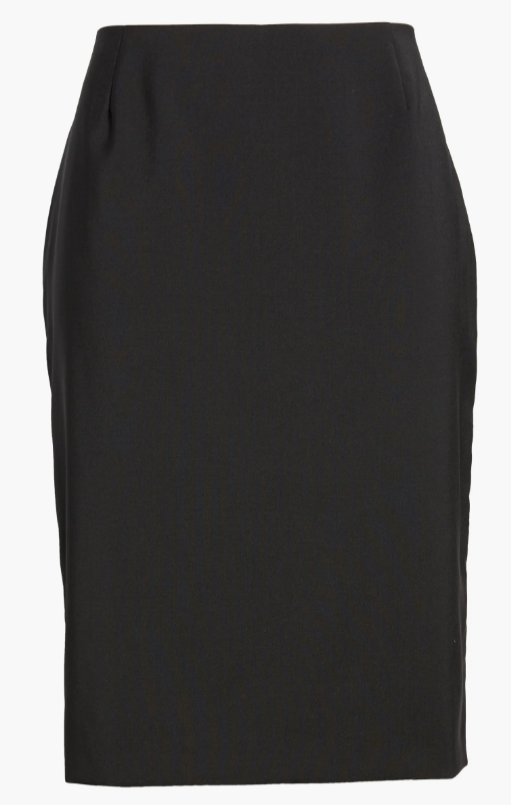
Like pants, the skirt should fit comfortably around the waist and hips without excessive wrinkling. A pencil skirt or A-line cut are classic styles for women’s suits.
While petite women can wear shorter skirts than taller women without looking like they’re too exposed, shorter skirts will rise when seated, possibly exposing more of the leg than desirable. The heel height worn with a skirt will also impact how short a skirt appears. Some people feel frumpy without heels in skirts, but no one should feel required to wear heels to look professional.
Skirt slits are also a consideration. The bottom opening of the skirt without the slit should be large enough to walk comfortably, and a slit that is too large may expose more of the leg than desired, especially when walking upstairs. The skirt is too tight if the slit is open while standing normally.
A pencil skirt that slides around so the fastening keeps moving is too loose and must be taken in. A skirt that hugs the bottom curve of the wearer’s bottom is too tight for a professional setting.
These are just a few considerations for how a suit should fit a woman. In a professional setting, your clothes exist to present you and your ideas in a flattering light. The resultant focus should not be on the clothes, but rather on the person wearing them.